3/28/2009

1975: Can Capitalism Survive?

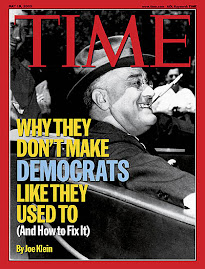
Looks like this isn't the first time the doomsayers of Capitalism's demise have raised their collective voices. Here's a cover story article from the 7/14/1975 issue of Time.
---
"An angry god may have endowed capitalism with inherent contradictions. But at least as an afterthought he was kind enough to make social reform surprisingly consistent with improved operation of the system."


John Kenneth Galbraith


“…Capitalism, Marx reckoned, would pour out more goods than workers could buy with the paltry wages that the system paid them. Wages might rise during a period of expansion, but that rise would cut into profits, leaving capitalists with too little investment money to keep the boom going, and the machine would falter into a slump.

Big capitalists would seize the opportunity to slash wages, buy up the plants and machinery of their ruined brethren and get the boom going again, but the cycle would repeat itself, leading to a worse crash. Eventually, ownership of the means of production would be concentrated among so few capitalists that they would be ripe for overthrow by a proletariat driven by increasing misery into revolution.

Though the apocalyptic prophecy was spectacularly wrong, Marx did point out two highly vulnerable areas in the system. His theory of capitalist concentration anticipated the rising power of large corporations, which can stifle competition and raise prices even in periods of weak demand. More important, Marx heralded the terrifying and prolonged depressions of the 1870s and the 1930s, which classical economics said the self-regulating market would never permit. The nightmare of the 1930s for a while threatened to give Marx the final word.

Fortunately, the Great Depression also inspired the most significant theories of John Maynard Keynes, the British economist who has often been called the savior of capitalism. Keynes insisted that a government could get the free economy moving up again by pumping in purchasing power—through tax cuts, heavy spending and the outright creation of money. Then production would increase, generating more savings, which would be invested. His prescription worked—though it took Government spending on the previously unimaginable scale of World War II to end the Depression. (Keynes also said that tax increases and spending cuts could help contain inflation, but popularly elected governments have seldom been brave enough to follow this part of the Keynesian prescription.)

Since World War II, all capitalist governments have become enthusiastically Keynesian. None would dream of leaving a depression, or even a severe recession, to right itself. By winning acceptance for the idea that government is responsible for the health of the economy, Keynes promoted a degree of state intervention into the market that has helped transform capitalism in a way that Smith never anticipated.

Keynesian philosophy accelerated the trend toward progressive legislation, which had been building in the U.S. since the days of the early trust busters and Teddy Roosevelt, and inspired a bewildering complex of interventionist policies. U.S. companies and entrepreneurs, for example, are restricted by banking and stock market regulations, antitrust prohibitions, consumer protection and antipollution laws, "affirmative action" programs that aim at forcing the hiring of more blacks and women, to name only a few measures. The poor who cannot sustain themselves in the market get Medicaid, welfare payments, food stamps.

Not all of this Government intervention has been beneficial, of course, and some of it has been downright harmful. The operations of federal transportation-regulation agencies, in particular, have often propped up prices and restricted competition. But this complex of laws has on the whole made capitalism both more humane and more effective…”

Read the Time cover story from July 14, 1975.

R-E-S-P-E-C-T


"You let a Senator get some million dollar contribution behind him and you can't tell me that he wouldn't command some respect and that is what we have got to get back in our Senate that has been lost -- respect!"

Will Rogers

3/25/2009

It's All About Decimal Point Placement

Political debate always sends me back to the history books. I was doing a little research on what was happening in and around 1976 and found some interesting quotes that show the debates is the same only the numbers have changed.

Recently a guy at the bar told me "When you were a kid, would you have ever thought that you'd be paying $150 for a pair of tennis shoes?"

I asked the guy who was in his mid-50s (my age), how much he paid when he was a kid. He said $15.

I asked him, "When you were a kid paying 15 cents for a medium come at the Dairy Queen, did you ever think you'd be paying $1.50 someday for a medium cone at the same Dairy Queen?"
---

"The fact is, we'll never build a lasting economic recovery by going deeper into debt at a faster rate than we ever have before. It took this nation 166 years until the middle of World War II to finally accumulate a debt of $95 billion. It took this administration just the last 12 months to add $95 billion to the debt. And this administration has run up almost one-fourth of the total national debt in just these short 19 months."

Ronald Reagan
March 31, 1976


"As a matter of fact, the Treasury Department just published a prototype consolidated financial statement last month, based on fiscal 1975 figures. It estimated that the deficit in fiscal 1975 was $152 billion, instead of $43 as the final budget figures for that year showed. So, we are really talking about more than a $160 or $165 billion deficit—far more—but even if it were only $165 billion, such a figure would be, and is, fraught with the most serious of implications."

Congressman Phillip Crane 1977
former Illinois Congressman from 1965-2005


"The 1976 Democratic Platform might well add another $200 billion in annual government spending and could, if implemented, create serious and protracted economic problems. The costs in the platform could amount to nearly $1,000 in new federal spending for every man, woman and child in the United States and would create real risks of a return to double-digit inflation which would rapidly erode the savings, earnings, and economic security of all Americans."

William Simon
Treasury Secretary under Nixon


Read more @ Imprimis.

3/24/2009

An Unbalanced Check


"You see, in Washington they have two of these bodies, Senate and the House of Representatives. That is for the convenience of visitors. If there is nothing funny happening in one, there is sure to be in the other, and in case one body passes a good bill, the other can see it in time and kill it."

Will Rogers


3/21/2009

Ignorance Begets Confidence

"It has often and confidently been asserted, that man's origin can never be known. But ignorance more frequently begets confidence than does knowledge: it is those who know little, and not those who know much, who so positively assert that this or that problem will never be solved by science."

Charles Darwin


"Darwin didn't know 99 percent of what we know, but the 1 percent he did know was the most important part."

Francisco Ayala
University of California biologist

3/02/2009

Congressman Paul Ryan -- The GOP's Future!

You read it here first...

Now that the adults have finally been purged from the Republican Party and knuckle daggers of the true conservative movement have taken over the junior high school, it's time for the fruit cake rhetoric to start surfacing.

Conservative Political Action Conference (CPAC) had its convention in Washington DC over the weekend and it looks like one Wisconsin Congressman Paul Ryan will be one of the rising stars of the conservative movement. Louisiana Governor Bobby Jindal inserted his credibility foot into his mouth, when told lies during his GOP response to Obama's speech last week. Sarah Palin is fading like the North Star in mid-June Alaska and the GOP Committee Chairman Michael Steele can't even explaining the difference between a job and work and whether or not work is a job.

So the GOP needs a fresh face and that looks to be Wisconsin's own Paul Ryan. Not only does he have the photogenic face, but he can use the words "Karl Marx" and "Ayn Rand" in the same sentence. I bet that sends a tingle up Shaun Hannity's leg...


"The Wisconsin Republican inferred that Obama's plan may sound familiar to those who follow political history. 'You see, what we have here is an update of [Karl] Marx's famous slogan -- 'From each according to their ability, to each according to his needs.' Now we have 'from the suckers who followed the rules, to those who borrowed beyond their means.'

Ryan says while Democrats want to impose a more intrusive state -- 'something out of an Ayn Rand novel' -- he is proposing an alternative conservative vision that involves "junking the tax code," cutting spending, as well as reforming health care, the federal budget, and the regulatory system."


Read more onenewnow.

2/23/2009

Sunset On The Home Of The Brave

"It is still difficult for me to believe that I was abducted, hauled from one country to the next, and tortured in medieval ways -- all orchestrated by the United States government."

Binyam Mohamed
In the statement released by his attorneys at a London news conference


In accounts provided by his attorneys, Mohamed said that U.S. officials flew him to Morocco and that he was tortured there for 18 months. He said he was beaten and had his penis cut with a razor. He said he was then transferred to a CIA-run site in Afghanistan and was beaten there regularly before being transferred to Guantanamo in September 2004.


"The very worst moment came when I realized in Morocco that the people who were torturing me were receiving questions and materials from British intelligence. I had met with British intelligence in Pakistan. I had been open with them. Yet the very people who I had hoped would come to my rescue, I later realized, had allied themselves with my abusers."

Read more @ The Washington Post.


"A lot of what needs to be done here will have to be done quietly, without any discussion, using sources and methods that are available to our intelligence agencies, if we’re going to be successful. That’s the world these folks operate in. And so it’s going to be vital for us to use any means at our disposal, basically, to achieve our objective."

Former Vice President Dick Cheney

2/16/2009

Before & After: Stuck In The Middle With You

"This year marks the 400th anniversary of the year Galileo turned his first crude telescope to the heavens. Through it, he observed spots on the sun and shadow patterns proving that the moon had mountains and valleys. These visible "imperfections" helped overturn thousands of years of traditional belief that everything in the heavens must be smooth, perfect and unchanging...


One need not be religious to see that a cosmic perspective gives some universal meaning to our lives. We may be only a tiny part of a vast universe, but we are here, and, as a species, we have accomplished great things. We have created staggeringly beautiful works of art and music, we have performed acts of love and generosity that make even the most cynical among us quake with emotion, and we have developed mathematics and science that have enabled us to learn our place in the universe.

These are achievements of consequence. But the cosmic perspective also should teach us some humility, because the central lesson of Galileo's discoveries is that we humans are no more central to the universe than our planet or star. Future generations and alien civilizations may enjoy our human creations, but no one will come running to our rescue if we choose to destroy rather than to create.

Sadly, this lesson in humility seems not to have taken hold, despite the 400 years we have had to absorb it. Nearly everyone is now aware that we are not the center of the universe. But emotionally and behaviorally, our species still acts as though the whole of creation somehow revolves around each of us personally. How else can we explain tyrants and dictators? Or religious fanatics who believe that their God actually wants them to kill those who think differently? And before you let yourself off the hook, ask yourself honestly if you don't at least sometimes think that those who are poorer, sicker or otherwise less fortunate than you are also somehow a bit less central to the universe than you are..."

Jeffrey Bennett
Astrophysicist

2/14/2009

Ray A Drop Of Golden Sun


"Music needs to make sense, needs to have order. From what some people consider the lowest stuff -- a cat in the middle of a cotton field shouting the blues -- to what's considered the highest -- a symphony or an opera -- it has to be structured...

...Blowing out notes in whichever way, whenever you please, paying no mind to the chord changes -- well, that doesn't hold me, doesn't make me want to listen. Far as I'm concerned, music should be beautiful, and the most beautiful aspect of music is its simplicity."

from Brother Ray
by Ray Charles & David Ritz

2/10/2009

Join The Club


"At this point in my life I had long since lost respect for the law. I had already seen too much shit -- in the name of the law -- which made me sick to my stomach. I don't see the police as black or white. I see them as the law. And it was the law who I once saw, earlier in my career, pull a guy from his car in a parking lot outside a dance hall and scream in his face, "Nigger, didn't you see that goddamn stoplight back there?" When the man attempted to answer, the law slapped him upside the head with their billy clubs and said, "Keep your mouth shut while we're talking, nigger." That was the law. It's one thing to watch a bunch of hoodlums acting that way. It's another when the law is doing it."

from "Brother Ray"
by Ray Charles & David Ritz


2/06/2009

Flag Pins In Black And White


"The more I saw, the more I realized how my own personal movement was limited. And the North was only a hair better than the South. Up there the hatred and prejudice was a bit more subtle, the hypocrisy a little slicker. You could change the lyrics, but the was still the same everywhere you went.

Don't get me wrong: I never blamed all the white people in America. I didn't fault all of any one group. Lots of white cats were afraid if they served blacks at their lunch counters or let blacks use the bathrooms in their gas stations, they might lose their whole business. After all, there were actual laws on the books against integration of any kind..."


"...Then there were the pressures of their friends. If a white dude was nice to a black, his partner might scream at him, "You a nigger lover or something? Next thing you know your daughter will be fucking a coon!"

On the other hand, I understood that the big Supreme Court decisions which were changing the laws about segregated schools were being made by white judges.

Still, every day I began to see that we were just starting to talk about getting certain things -- freedom to go to school, to eat in a truck stop, to piss in a bathroom -- that should have been ours all along."

from "Brother Ray: Ray Charles' Own Story"
by Ray Charles & David Ritz

2/04/2009

America's "Freedom Ride"


"In the summer of 1962, blacks remained frustrated by the slow pace of progress toward equality. Martin Luther King Jr.'s SCLC, SNCC, and other groups, with their strategy of direct action involving boycotts, civil disobedience, nonviolent sit-ins, and mass demonstrations, had succeeded in dramatizing American racial injustice in the South and in focusing the attention of the nation and the world on it. This caused considerable embarrassment for the Kennedy administration at the time when America sought to compete effectively worldwide with Soviet communism and other repressive ideologies. At the United Nations and in other international forums, Soviet leader Nikita Khrushchev, Cuban rulers Fidel Castro, and other Communist spokesmen pointed to the racial turmoil in America as evidence of American hypocrisy in human rights.

In the mind of the President, direct action, with in cycle of escalating black demands followed by increasingly violent white backlash, threatened to rend America's tenuous social fabric. Black and white Freedom Riders were attacked and brutally beaten, their buses sometimes burned, by angry white mobs wielding ax handles, bicycle chains, and baseball bats. Local law enforcement, authorities, sympathetic to the rabble, frequently stood by idly as the violence transpired or even conspired to bring it about."

from "Thurgood Marshall: Warrior At The Bar, Rebel On The Bench"
by Michael D. Davis & Hunter R. Clark


"We could be driving for hours and never find a gas station which would let us use the bathroom. If we stopped by the side of the road, we stood a chance of getting busted, so we'd open both doors of the car and piss between them. We could be hungry as bears and go half a day before we'd find a joint that would serve us. The race thing hit us where is hurt -- in the stomach and in the balls."

from "Brother Ray: Ray Charles' Own Story"
by Ray Charles & David Ritz

Americans Don't Want The Hole Thing

"I saw an article today that indicated Wall Street bankers had given themselves $20 billion worth of bonuses ($18.4 billion, actually, according to New York comptroller). That is the height of irresponsibility. It is shameful...Part of what we're going to need is for the folks on Wall Street who are asking for help to show some restraint, some discipline and some sense of responsibility. The American people understand we've got a big hole we've got to dig ourselves out of. They don't like people digging a bigger hole even as they're being asked to fill it up."

President Obama


"There will be a time for them to make profits and a time for them to get bonuses. This is not that time."

President Obama

2/02/2009

There Ain't No Honey On The Moon


The "stimulus package" must have been a big topic of discussion this weekend. To non-related people basically hit me with the same question today. The Rush Limbaugh Parrot squawked that Obama is driving the national debt to a level where he can't sleep at night worrying about his kids' future. He said we are turning in European democracies -- Rush says this a lot. When I asked if he knew anybody who lives in Europe, he said he knows someone who lives in Canada. I pointed out that Canada is not in Europe.

Other person called me and said, "Look what you Democratic President is doing!!! Who's going to pay for all this?"

They both voted for McCain and Bush twice. I pointed out that they need to remember that McCain interrupted his campaign to fly back to Washington to help push through the first stimulus package. So far, Obama is responsible for nothing concerning budget deficits and national debt. It's a Bush thing.

Christ the only Presidents that have driven up the national debt since 1950 are Reagan, Bush and Bush. It's good to see that gaining a new President doesn't necessarily mean the facts are going to start being used. Both said that the problem with the Democrats is that they don't know how to live within a budget. Both are college graduates and, I believe, a little confused.

The budget is being drawn up now. It's easy to live with in your budget, if you make your budget big enough. The question is...is the outgo exceeding the income and, if so, how are you going to finance the difference.

I amazed Obama made it two weeks as President before the 2012 Presidential election started. After Reagan, Bush and Bush spent 20 Presidential years telling us about shrinking government and now the talk has stopped. The battle in the Republican Party will now be between the US House and Senate v. the Republican governors.

And so it goes...

Questions & Solutions

"By standing united, we offered hope to struggling families and small businesses across America looking to Washington for real solutions to the challenges they face. We also made good on our pledge that Republicans will not simply be the party of opposition, but the party of better solutions."

John A. Boehner R-Ohio
House Minority Leader


"The question we ask today is not how big or small our government is, but whether it works."

President Barack Obama

1/30/2009

Snack Time In America

"Qu'ils mangent de la brioche."

Marie Antoinette

Translation: "Let them eat rich, expensive, funny-shaped, yellow, eggy buns."


On Wednesday, Congress passed the $825 billion economic stimulus plan that is aimed at putting people to work in what some call a new New Deal, a reference to Franklin Delano Roosevelt's public works program in the 1930s and '40s.

Banks, automakers, even states. Industries, retailers, consumers: Across the board, the nation is hurting economically. On Monday alone, major U.S. firms announced a total of 62,000 job cuts as companies close stores and plants.

Despite crippling losses, multi-billion-dollar bailouts and the passing of some of the most prominent names in the business, employees at financial companies in New York, the now-diminished world capital of capital, collected an estimated $18.4 billion in bonuses for the year. That was the sixth-largest haul on record, according to a report released Wednesday by the New York State comptroller.


“I have no confidence that they intend or desire to change. These bankers got away with murder, and it’s obscene that close to nothing is being asked of financial institutions. I get incensed at the thought that a bank that’s getting billions of dollars in taxpayer money is out there buying fancy new airplanes.”

Senator Charles Levin

Citigroup had plans to get a new $50 million corporate jet, the exclusive Dassault Falcon 7X seating 12, after losing $28.5 billion in the past 15 months and receiving $345 billion in government investments and guarantees.

Former Merrill Lynch CEO John Thain justified paying out large bonuses because "“If you don’t pay your best people, you will destroy your franchise."

While cutting payrolls and laying off people, Thain was planning a $1 million remodeling job of his office. The remodel included curtains for $28,000, a pair of chairs for $87,000, fabric for a “Roman Shade” for $11,000, Regency chairs for $24,000, six wall sconces for $2,700, a $13,000 chandelier in the private dining room and six dining chairs for $37,000, a “custom coffee table” for $16,000, an antique commode “on legs” for $35,000, and a $1,400 “parchment waste can.”

"The businesses that are shedding jobs to stay afloat, they can't afford inaction or delay. The workers who are returning home to tell their husbands and wives and children that they no longer have a job and all those who live in fear that their job will be next on the cutting blocks, they need help now."

President Obama


"How will billions spent on school snack programs and repairs to the Smithsonian Institution stimulate the economy? How will $3 billion being spent for a prevention and wellness fund stimulate the economy? It is clear that this spending package has become a one-stop shop for every item on a spending agenda - a massive, unprecedented spending bill aimed to bypass the normal appropriations process and subsidize a broad range of existing and new government programs."

Congressman Joe Wilson
R-South Carolina


During our lunch walk discussion yesterday -- a time we dedicate to finding the answers to all things big and small -- the following question was raised:

"Why should my taxes dollars go to feed after-school snacks to some other parents' kid?"

Feel free to provide your answers to this question...

1/29/2009

Conspiracy Anyone?


I've been having an e-mail chat with an acquaintance of mine who is hardwired to Rush Limbaugh. Although he constantly tells me that he is opened minded about all things political, the only thing he mentions concerning his information is what he hears on Rush's daily show. He takes his lunch out to the car so he can get educated to Rushdumb.

He told me the group ACORN, the Association of Community Organizations for Reform Now, is one of the most radical groups in the nation and play a key role in Obama's election victory. I told him "ACORN" is a word used by the White Right as a code word for Blacks...especially intercity Blacks. Since ACORN is a visible group working in the inter cities of most large American cities, the likes of Rush and Hannity and Glen Beck and others to strike fear in the hearts of White Americans in large voting population areas. It didn't work.

Doing a little Internet research, I found an interesting web site (Discover The Network) that tracks the great left-wing conspiracy. You will find out who the evil doers are who are trying take over the all-white country clubs or America and make their little White daughters sit next to little Black boys in elementary school and share stimulus package snacks after school while waiting for the bus.

If you know of a corresponding website the helps track the vast right wing conspiracy, let me know.


Discussion question:

Which group is more radical ACORN, ACLU or NAACP and why?

1/23/2009

A Little Imagination Might Move Mountains

My uncle the engineer sent me an interesting video about a guy who shows how Stonehenge might have been assembled using ordinary items and simple techniques. In the world that seems to worship the god of over-complication, the simplicity demonstrated here makes one think...

1/21/2009

1/04/2009

The Forgotten Man by Amity Shlaes


On Roadkill's recommendation, I read The Forgotten Man by Amity Shlaes. Shlaes is a columnist for Bloomberg and a senior fellow on the Council on Foreign Relations. She writes on political economy and taxes.

I found this book very interesting and an excellent example of how hindsight can be somewhere around 20/20 vision -- especially if you have a free market optometrist. From a free market perspective, Shlaes weaves an interesting story that basically says nothing FDR did help shorten or reduce the impact of the Great Depression.

As I read this history, I kept thinking of something my Old Man used to say concerning having kids -- "Kids aren't born with instruction books." As we are seeing today, no one really knows what to do to fix our ailing economy. The Big Government experts are calling for big government remedies for the cure. Throw big piles of money at the sick economy. Lets hope that works. At the same time, a lot of former free-marketeers have their gloves open and are yelling for Big Gov to pitch a pile of cash their way. Quietly sitting in the Bull Pen are the free marketeers spitting their disgust at the economic game being played and telling us to just like the economy run its course.

I found it interesting the FDR kept throwing ideas at the economic wall and seeing what would work and what would get past the legal umpires. It something didn't work or ran into a Constitutional wall, he dropped it and tried something else. Personally, I admire FDR for having the political guts to try different things. Obviously it wasn't the case in the 1930s where our leader just sat on his hands and let the economic nature take its course. It sure isn't today.

Even Hoover didn't sit on his has. He tried thinks like putting tariffs in place that caused foreign competitors to play the same game. This game led to a deterioration of the economy's health. Hoover received a lot of ink in this book and I found it interest to get past the caricature of Hoover we are so often fed.

Hoover was an impress individual. As Secretary of Commerce under Presidents Harding and Coolidge, he championed government intervention and pushed for economic modernization. Coolidge called Hoover "Wonder Boy," because he was always coming up with big ideas. Hoover's story is a rags to riches story. Before entering public service, Hoover was probably one of the richest non-capitalists in the country. When he was elected President in 1928, Hoover had never been elected to any previous office.

The book also discussed Andrew Mellon and his run-ins with FDR. Mellon must be considered one of the founding neocons. He advocated cutting the income tax rate, cutting taxes on low incomes, reducing the federal estate tax and making government more efficient. Hoover too was big on making government more efficient. However, I think the two came at it from different angles. Hoover was coming more from the "scientific management" school for Fredrick Winslow Taylor and Mellon from the "keep you hands off of my pile" school of business.

Another interest book on Mellon is Mellon: A American Life by David Cannadine. It covers the Mellon family history and details the building of an American dynasty and world behind the Mellon money. Likewise, another related book about Henry Clay Frick titled Meet You In Hell by Les Standiford. Both these books give you a detail look into two of the big robber barons and how the smell of money make Pittsburgh the major driving wheel in America's industrial engine in the late 1800s and early 1900s.

Another book in checked out was FDR by Jean Edward Smith. It gave a cradle to the grave overview of FDR's life and added addition insights into the touch points between Hoover, Mellon and the economic tinkering of the 1930s. As I stated earlier, it's great to be an armchair quarter reliving the what-if game that hindsight provides.

I don't pretend to be any expert on the economic perspectives of the Great Depression, but I am very interested in the big names and no names involved in that time in our nation's history.